Custom Compression Clothing — Graduated, Zoned, mmHg-Verified Across Three Athletic Tiers
Three pressure tiers (8–25 mmHg) graduated distal-to-proximal and zoned by muscle group. Target mmHg measured on an on-leg rig, held to a ±3 mmHg batch tolerance, and re-read after 30 washes — so the number on your hangtag matches the number on the rig.
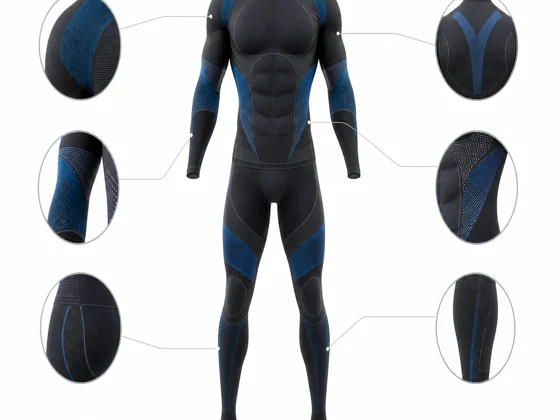 Core 8–15 mmHg
Forearm 15–20 mmHg
Thigh 15–20 mmHg
Ankle 20–25 mmHg
Core 8–15 mmHg
Forearm 15–20 mmHg
Thigh 15–20 mmHg
Ankle 20–25 mmHg
Pressure steps down distal → proximal
How a Graduated Compression Manufacturer Builds Light, Moderate, and Firm Pressure
Most factories knit one even-tension block and call it compression. We grade pressure as an engineered profile — distal-high to proximal-low — across three athletic tiers.
Pressure is generated by elastane content and knit tension working together: our compression fabrics carry a deliberately higher spandex load than standard activewear knits, because below that threshold a garment can feel tight at first wear yet lose its squeeze within weeks. The tier you pick sets the spandex percentage, the knit tension program, and the GSM band — three dials we tune as one system.
All-day base layers and light tops. The lowest-pressure tier for wear-all-day lines that still hold a true graduated profile.
The DTC performance and recovery staple — tights, sleeves, and tops that work during a session and after it.
Firm tights and calf sleeves for hard training and recovery use. Each tier is graduated and can be zoned by muscle group.
These are athletic and recovery compression sportswear tiers. We manufacture to your target mmHg, but we do not produce clinically-classified therapeutic or medical-grade compression, and we do not carry medical certification — that classification is the brand’s responsibility.
Eight Compression Pieces We Cut, Knit, and Grade — Top to Limb
From a compression base layer manufacturer’s torso pieces to graduated tights and calf and arm sleeves — one full-body system, one pressure standard, each silhouette waiting for your spec.
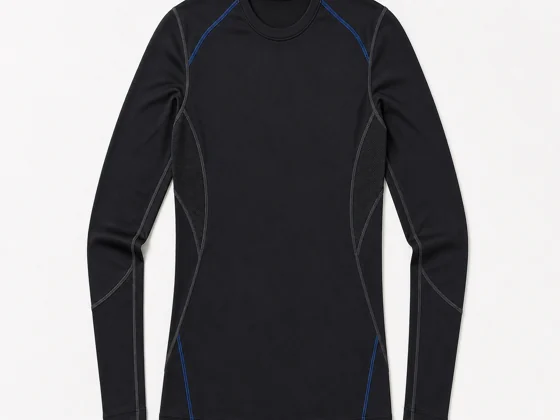
Compression Base-Layer Top
Light–Moderate · long-sleeve, full-torso graduated · 220–260 GSM · under-kit and cold-session base layer.
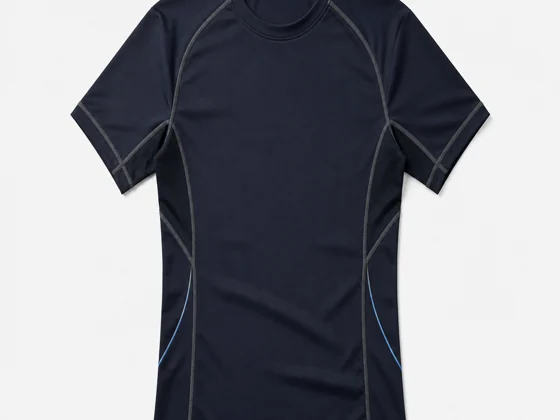
Short-Sleeve Compression Top
Light–Moderate · torso compression · 220–260 GSM · training and court.
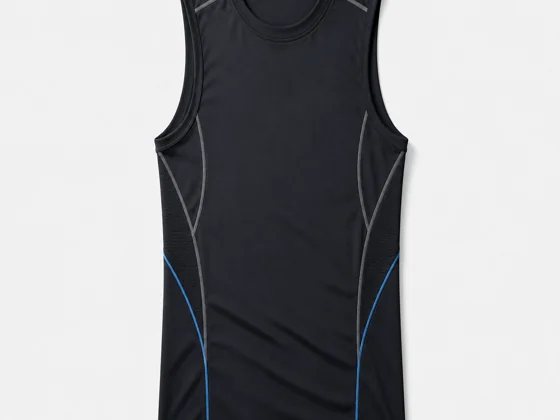
Compression Tank
Light · core and back zone support · 220–250 GSM · lifting and training.
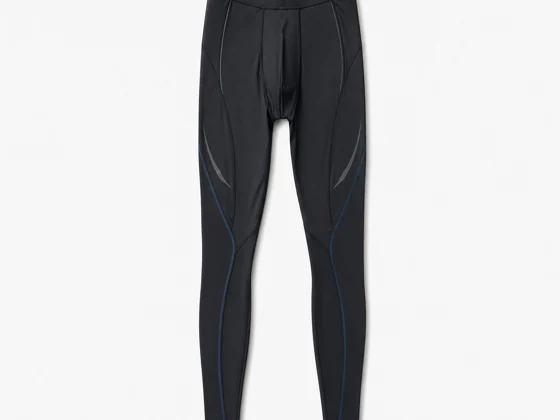
Compression Long Tights
Moderate–Firm · quad→calf graduated, zoned panels · 260–320 GSM · the lower-body hero piece.
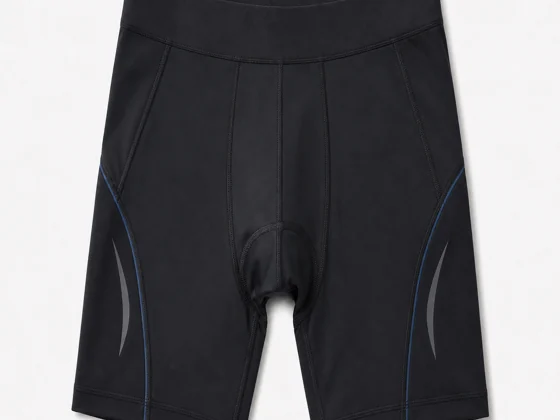
Compression Shorts (5″ / 7″)
Moderate · thigh and glute zoned · 260–300 GSM · sprint and court.
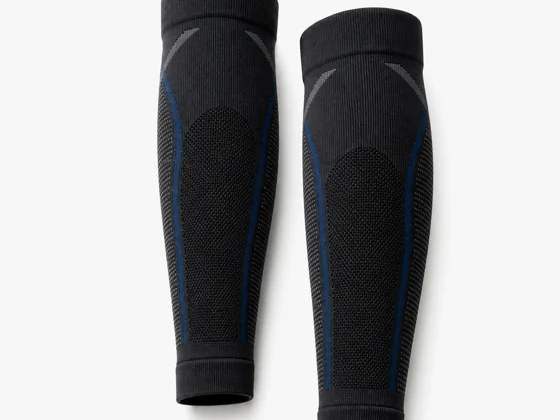
Calf Sleeve
Moderate–Firm · ankle→calf graduated · 240–280 GSM · run and recovery — the classic graduated piece.
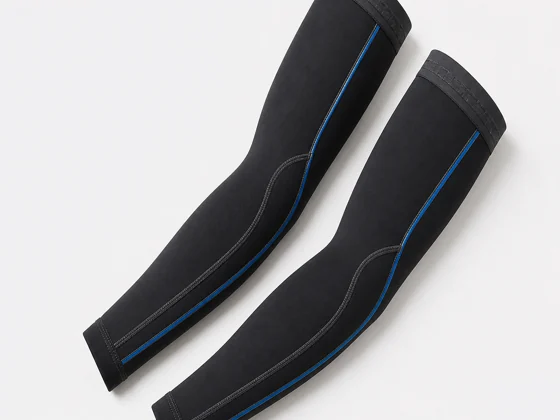
Arm Sleeve
Moderate · forearm→bicep graduated · 220–260 GSM · court, cycling, and sun cover.
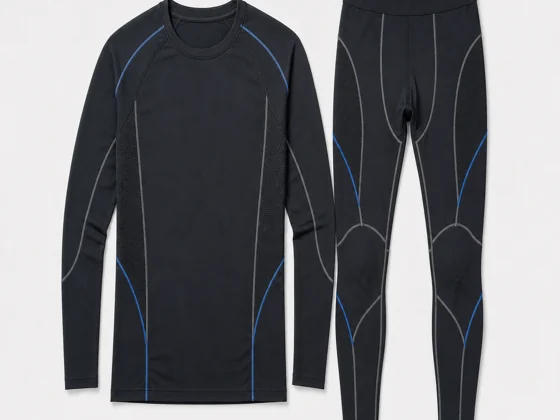
Full-Body Compression Set
Top + tights coordinated to one pressure standard across both pieces — the system proof piece.
Every piece runs on our own lines to one pressure standard and one dye batch — the calf sleeve’s mmHg matches the tights’, and the black on your top matches the black on your sleeves.
The Graduated and Zoned Build Behind Our Custom Compression Wear
Graduated pressure is a knit program and a panel map, not a fabric choice. Below are the gradient circular-knit programs, zoned panel maps, and seam systems behind every compression build — engineered by our pattern team and assembled through our cut-and-sew lines (lines 5–9).
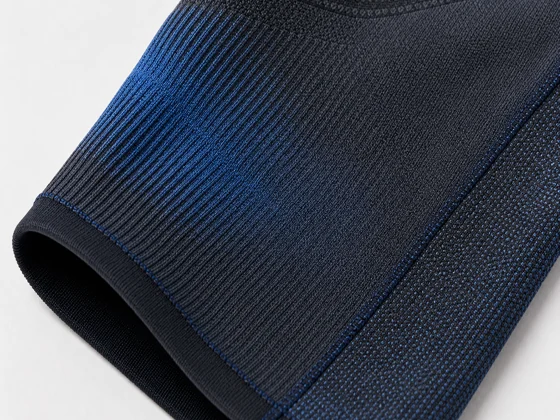
Graduated profiling
- Gradient circular-knit — seamless tights and sleeves, tension programmed to step down distal→proximal.
- Engineered cut-and-sew paneling — tops and shorts built panel-by-panel, not one even block.
Zoned mapping
- Firmer target panels over the calf, quad, and core where support is specced.
- Lighter joint panels at the knee and elbow — true zoned compression wear, built to your zone map.
Seam & edge
- Bonded heat-weld · flatlock · coverstitch seams — hold pressure, no chafe.
- Bonded silicone gripper hems and no-roll bands so sleeves and tights stay put under load.
Match your pressure tiers to fabric
Send your target mmHg and the pieces you need. The knit method and zone map come back confirmed within one working day.
Match my pressure tiers to fabricHow We Verify mmHg — the Compression Clothing Manufacturer’s Pressure QC
Pressure measurement is the engineering acceptance test for graduated compression — target mmHg recorded on an on-leg rig, ±3 mmHg batch tolerance held lot to lot, retention re-read at 30 washes, per the four-step protocol below.
Measure on an on-leg rig
An on-leg pressure-mapping rig reads mmHg at defined zones — ankle, calf, thigh — against the graduated profile you approved, not against yarn tension or GSM alone.
Confirm a target-pressure spec
A zone target-pressure spec (zone × target mmHg × graduated %) is confirmed on your approved sample before any bulk runs.
Verify every lot to ±3 mmHg
Every production lot is sampled and read on the rig. The batch-to-batch tolerance is ±3 mmHg — a “light” tier reading on one PO stays within the same ±3 mmHg envelope on the next.
Re-read retention after 30 washes
Target pressure is re-read after 30 home washes and held within tolerance, so a recovery sleeve that read 18 mmHg new still reads in range after a season.
| Zone | Target mmHg | Graduated % |
|---|---|---|
| Ankle | 20–25 | 100% |
| Calf | 15–20 | ~80% |
| Thigh | 10–15 | ~60% |
Batch-to-batch tolerance
This is athletic and recovery compression measured as sportswear. It is not a clinically-classified medical-grade compression device, and we do not carry medical certification on your behalf.
Why zoning changes the rig protocol: a zoned garment cannot be passed on a single-point reading. Each firmer panel — calf, quad, core — gets its own rig position and its own target in the zone spec, and our in-house lab technicians sign each position off separately. A single-point reading on a four-zone garment loses per-zone resolution; we publish the per-zone readings in the pre-shipment package instead.
Pressure-Profile Spec Worksheet — What Your Compression Tech-Pack Should Carry
Most compression specs arrive with “graduated, target 20 mmHg” and nothing else. The worksheet below is what a buyable spec actually needs: per archetype, what to write into a tech-pack so the pattern team and the on-leg rig agree on the same numbers.
| Garment archetype | Zone count | Distal anchor mmHg | Step-down % | Knit / cut method | QC rig anchor point |
|---|---|---|---|---|---|
| Calf sleeve | 2 (ankle, calf) | 20–25 (firm) | 100% → ~80% | Gradient circular-knit | Ankle |
| Lower-body tight | 3 (ankle, calf, thigh) | 20–25 (firm) | 100% → ~80% → ~60% | Gradient circular-knit, panel-mapped quad | Ankle + thigh |
| Upper-body base layer | 2 (core, shoulder) | 8–15 (light) | 100% → ~70% | Cut-and-sew panel | Core |
| Full-body coordinated set | 4 (ankle, thigh, core, forearm) | varies per piece | per-piece step-down | Mixed (knit tights + cut-sew top + knit sleeves) | One reading per piece on shared mmHg standard |
Every value in this worksheet uses the in-house tier and graduation ranges shown above; production starts only after you sign off each archetype’s reading on the rig. The pattern-side workflow lives in tech-pack & pattern; sample-acceptance specifics are on the FAQ.
Fabric and Pressure Specs — Light, Moderate, and Firm Compression
Every pressure tier mapped to its fabric, GSM, knit, target mmHg, graduated profile, and wash-retention — rolls are weight-tested, elongation-tested, and shade-instrumented in our in-house lab before release to the cutting tables.
| Tier | GSM | Lycra/Spandex | Knit | Target mmHg | Graduated | Zoned panel | Retention @30 wash | Wicking |
|---|---|---|---|---|---|---|---|---|
| Light | 220–250 | 18–20% | circular / cut-sew | 8–15 | distal→proximal | optional | within ±3 mmHg | High |
| Moderate | 250–290 | 18–22% | gradient circular-knit | 15–20 | distal→proximal | target zones | within ±3 mmHg | High |
| Firm | 280–320 | 20–22% | gradient circular-knit, bonded | 20–25 | distal→proximal | target zones + power-mesh | within ±3 mmHg | High |
Notice the spandex column: it climbs with the tier, from 18% at light to 22% at firm, because elastane percentage — not GSM alone — is what sustains pressure through a season of wear. Each incoming compression lot gets its mmHg, weight, and shade verified on arrival, with ΔE checked by spectrophotometer before a single panel is cut.
OEM, ODM, and Private Label Compression Apparel Production
Three routes into a verified-pressure program, depending on whether the spec, the block, or only the label is yours.
OEM (Cut-and-Sew + Gradient Knit)
Your tech-pack and target mmHg, our knit and cut-and-sew floor, full control as an OEM compression sportswear factory.
For brands arriving with a documented pressure spec.
View OEM process →ODM (Our Blocks)
Our graded compression blocks across all three tiers — you change fabric, color, print, and label.
For lines that need a proven gradient without pattern development.
View ODM options →Private Label Compression Wear
Our compression blanks, your hangtag, care label, and packaging.
For getting a branded kit to market quickest.
View private label →Customization: target mmHg + zone map · graduated profile · Pantone color match (ΔE ≤1.5) · sublimation / DTG / silicone / reflective print · silicone gripper hems · woven label, hangtag, and polybag kit.
Commercial terms: a compression run enters at the factory-wide 100-piece-per-style threshold; sampling fees and bulk timelines follow the same single policy — the live figures are maintained on our FAQ so they never drift out of date here.
Sampling and product family: a wearable pre-production sample with rig readout is USD 45 per piece, returned in 5 working days on stock fabric or 12 working days on custom fabric — full workflow on small-batch sampling. Compression sits within our Training & Performance product family alongside leggings, shorts, and sports bras; high-stretch yoga pant engineering with high-rise and gusset construction lives on the yoga apparel manufacturer page.
Custom Compression Manufacturing — Questions Buyers Ask
The pressure-engineering answers a compression buyer needs before committing a spec.
Do you make graduated and zoned compression, or only uniform tight fabric?
Graduated and zoned, in-house. We knit gradient circular-knit tights and sleeves that step pressure down distal to proximal, and we panel cut-and-sew tops and shorts with firmer zones over the calf, quad, and core. Uniform tight fabric is not real compression; a graduated profile and a zone map are what we build to your spec.
Can you hit and verify a specific mmHg?
Yes. We measure target pressure on an on-leg rig against your approved profile, confirm a zone target-pressure spec on the sample, and verify every production lot. Batch-to-batch tolerance is ±3 mmHg, and we re-read pressure after 30 washes. That is what lets you label a real mmHg and defend it.
Do you make medical-grade or therapeutic compression?
No. We manufacture athletic and recovery graduated compression — roughly 8–25 mmHg — as sportswear, built to your target mmHg. We do not produce clinically-classified therapeutic or medical-grade compression devices, and we do not carry medical certification. That regulatory classification is the brand’s responsibility, and we are glad to build to your stated athletic spec.
Does a gradient-knit program raise the entry threshold versus a simple sleeve?
No. The knit programming is amortized into the run, so a graduated tight enters on the same per-style terms as a basic sleeve. Whatever the commercial figures are when you order, they apply identically across the compression range — current terms sit on the FAQ.
How do I approve the pressure before bulk runs?
On a pre-production piece read on the rig. You sign off the pressure profile, fit, fabric, and color — including the measured mmHg at each zone — and that signed reading becomes the standard every bulk lot is verified against. Nothing is cut until the number on the rig matches the number you approved.
Can you build a full compression system to one pressure standard?
Yes. Tops, tights, shorts, and calf and arm sleeves all run on our own lines to one pressure standard and one dye batch, so a coordinated wholesale compression clothing kit reads the same mmHg across pieces and matches in color. The sleeve’s 20 mmHg matches the tight’s.
How does private label compression work?
Your branding goes onto our verified compression blanks across the three pressure tiers — the gradient engineering is already proven, so the program moves straight to labels, hangtags, and packaging. Tell us which tiers you want under your name and we map the blank range to them.
How consistent is pressure across reorders?
We hold the target mmHg to ±3 mmHg per lot and read it on the rig in your pre-shipment package, so a reorder reads the same pressure as your first run. As a recovery compression clothing manufacturer, we keep the number stable season to season, not just on the first sample.