Starting a private label activewear brand in 2026 without a solid manufacturer? That's like running a marathon in the wrong shoes — you'll burn out fast.
Here's the hard truth. Most first-time founders waste months and thousands of dollars on the wrong suppliers. They obsess over logos before locking in performance fabrics. Or they freeze up because a low MOQ activewear manufacturer quoted higher than expected.
This guide cuts through all of that.
You'll leave with a battle-tested 5-step framework built for the 2026 market. It covers everything from finding your high-growth niche to sending your first manufacturer outreach — with scripts that get real responses.
Starting at $3,000 or scaling toward $15,000? There's a clear path forward either way.
Define Your Niche Positioning And Validate 2026 High-Growth Tracks
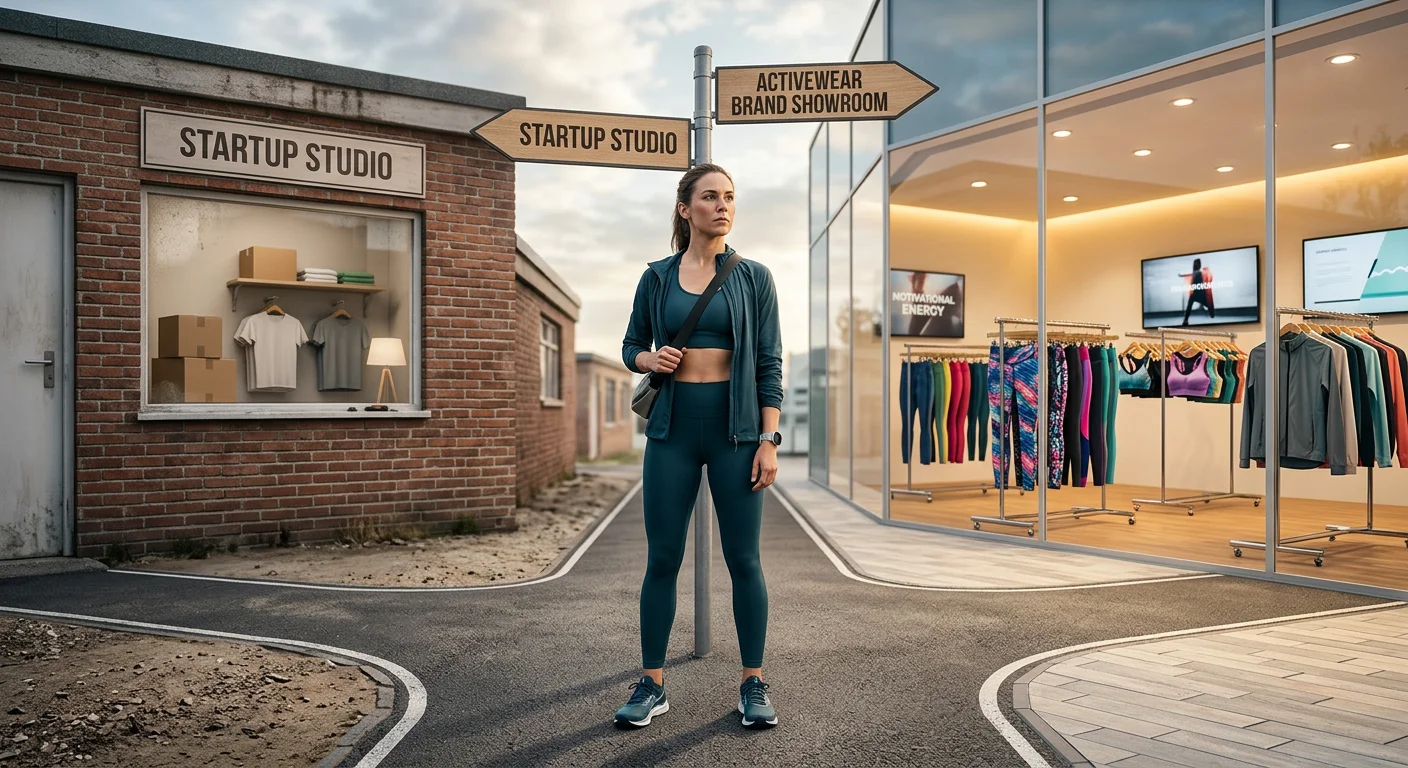
The activewear market doesn't reward generalists. It rewards specificity.
Don't contact a single low MOQ activewear manufacturer or source one yard of performance fabric until you lock one thing in: a niche position sharp enough to stand out in a crowded market.
Here's the framework that works: one clear audience + one sharp problem + one defensible advantage. That's your entire positioning brief. Everything else — branding, fabric selection, your OEM activewear production specs — follows from this.
The 3 High-Growth Tracks Worth Betting On in 2026
Stop guessing which segment to enter. The data points to three lanes with real momentum:
1. Plus-Size Activewear
This isn't about adding an XL option to your size run. The real opportunity is performance-first fit for strength-training women (XXL–4XL) . Think reinforced seams, high-support compressive construction, and squat-proof fabric that holds up. Your hero SKUs: high-rise leggings, compressive sports bras, reinforced training tees. The positioning edge isn't extended sizing. It's treating performance as a priority for bodies the industry has long ignored.
2. Sustainable / GRS-Certified Lines
Eco-conscious DTC buyers no longer respond to vague "green" language. They want proof — recycled nylon/spandex blends, GRS certification, traceable supply chains. Sustainable activewear manufacturing built around certified materials commands premium pricing ($65–$105+). Plus, it generates organic content with little extra effort. Hero SKUs: recycled seamless sets, commuter basics, low-impact dye leggings.
3. Male Athleisure / Performance Hybrids
Urban male wellness commuters want one wardrobe that handles the gym and the office. 4-way stretch joggers , moisture-wicking tees, wrinkle-resistant silhouettes — this is athleisure private label territory. Competition at the mid-tier price band ($65–$105) is thin. That gap is worth targeting.
Validate Before You Bulk Order
Pick your track. Then run through this checklist before putting a dollar into inventory:
Validation Step | What You're Measuring |
|---|---|
Build a one-SKU landing page | Email signups + checkout intent |
Run a 10–15 response survey | Willingness-to-pay (WTP) |
Audit 5–10 direct competitors | Positioning gaps in price, audience, or outcome |
Monitor competitor ads for 30–60 days | Demand persistence |
Your go/no-go signal is straightforward: positive WTP from survey data + real waitlist engagement + a clear gap in the competitor landscape. All three? Move forward. Missing one? Fix your positioning first.
Brands that fail at the fitness apparel branding stage almost always skipped this step. No manufacturer relationship can fix a positioning problem after the fact.
Shortlist Manufacturers Using The 5-Core Evaluation Matrix
Most founders reach out to manufacturers the same broken way: contact ten factories, get buried in inconsistent quotes, and default to whoever replies first. That's not sourcing. That's gambling.
The fix is a structured pre-screening system — a 5-core evaluation matrix that scores every potential low MOQ activewear manufacturer on 100 points before you spend a dollar on samples.
Here's how it works.
The Scoring Structure
Five criteria. Twenty points each. Total: 100.
Score each vendor on a 0–4 scale, multiplied by 5 (so your increments are 0, 5, 10, 15, 20). Shortlist 3–5 vendors for detailed comparison. This keeps scoring objective. It also stops you from drifting toward factories with polished websites instead of factories with real compliance depth.
Criterion 1: MOQ Flexibility (0–20 pts)
This is your first filter for OEM activewear production as a startup.
Score | What It Means |
|---|---|
0 pts | MOQ ≥500 pcs/style. No exceptions. Walk away. |
5 pts | 300–500 pcs/style. Extra charge for anything smaller. |
10 pts | 200–300 pcs/style. A few test order exceptions possible. |
15 pts | 100–200 pcs/style. Mixed colors/sizes allowed within one style. |
20 pts | <100 pcs/style OR tiered startup MOQ (50/100/200 with price ladders). |
Score this last. First, check MOQ for each of these areas on its own: style, color, dye lot, reorders, and embellishments. A factory quoting 100 pcs/style can jump to 300 pcs minimum the moment you add an embroidery hit.
Criterion 2: Sampling Speed (0–20 pts)
This isn't about being impatient. In activewear supply chain management, sampling speed controls how fast you can iterate — and how much budget you burn while waiting.
Score | What It Means |
|---|---|
0 pts | Quote >5 days; samples >25 days. |
5 pts | Quote 3–5 days; samples 20–25 days. |
10 pts | Quote 48–72h; samples 15–20 days. |
15 pts | Quote ≤48h; samples 10–15 days. |
20 pts | Quote ≤24–48h; samples dispatched 5–10 days after tech pack + payment. |
Request lead times for all three sample stages: first prototype, fit sample, and pre-production (PP) sample. Ask about rush surcharges upfront. Some factories charge a flat fee. Others add a percentage.
Criterion 3: Fabric Certification & Compliance (0–20 pts)
This criterion separates serious sustainable activewear manufacturing operations from factories that drop certification names without any paperwork to back them up.
Score | What It Means |
|---|---|
0 pts | No formal certs. Vague claims only. |
5 pts | Claims "OEKO-TEX mill" but can't produce a current certificate. |
10 pts | At least one of: OEKO-TEX Standard 100, BSCI audit, or SGS test reports. |
15 pts | Combo: OEKO-TEX + BSCI/SEDEX + lab tests available on request. |
20 pts | Full pack: OEKO-TEX, GRS (for recycled lines), BSCI/WRAP, and routine third-party test reports per fabric lot. |
Request PDF certificates with four details: brand name, certificate number, scope, and expiration date. Pursuing the GRS-certified sustainable track from Section 1? Confirm which styles and fabric lots fall under GRS coverage. Not all products at a certified factory qualify on their own.
Also ask whether they test to your target market standards: EU REACH or US Proposition 65. For performance fabric sourcing aimed at regulated markets, this is a hard requirement — not a nice-to-have.
Criterion 4: Communication Responsiveness (0–20 pts)
Poor communication compounds fast. Every supply chain delay traces back to a missed or slow message.
Score | What It Means |
|---|---|
0 pts | >4 business days to respond. Generic, unclear answers. |
5 pts | 2–4 day response. Basic English. No dedicated contact. |
10 pts | 24–48h response. Functional English. Email only. |
15 pts | ≤12–24h. Dedicated PM/account manager. Live channel available (WhatsApp/WeChat). |
20 pts | <8h response during business hours. Clear, structured replies. Agreed comms SOP with weekly check-ins. |
Before locking in a vendor, confirm four things: their named project manager, timezone overlap with your working hours, preferred communication channels, and the escalation path for when your PM is offline.
Criterion 5: After-Sales & Quality Policy (0–20 pts)
Almost every first-time white label activewear buyer skips this one — until something goes wrong.
Score | What It Means |
|---|---|
0 pts | No written policy. "We discuss case by case." |
5 pts | Informal promise to fix "big problems." No defined threshold. |
10 pts | Basic written terms for major defects only. No percentages or inspection process defined. |
15 pts | Defined defect rate threshold (e.g., >2–3%). Accepts third-party pre-shipment inspection. |
20 pts | Written SLA with defect timelines, photo/video evidence requirements, and willingness to sign a QC/defect appendix to the PI. |
Ask for a sample warranty clause from a past client. Ask how they categorize defects — critical, major, minor. A manufacturer who won't put quality terms in writing is telling you something: disputes will be settled on their terms, not yours.
Your Shortlist in Action: 4 Pre-Scored Manufacturers
Skip starting from zero. These four manufacturers have been pre-scored against the matrix so you have a realistic benchmark from day one.
Manufacturer | MOQ | Sampling | Compliance | Comms | After-Sales | Est. Total |
|---|---|---|---|---|---|---|
Vendor A – Foshan, est. 2016. Women's sets, sports bras, compression. Strong digital printing. | 10–15 | 10–15 | 10–15 | 10–15 | 5–10 | 45–70 |
Vendor B – Guangdong/Fujian OEM/ODM specialist. Performance fabrics, custom cut-and-sew, seamless, sublimation. GRS + OEKO-TEX + in-house QC lab. | 15–20 | 15–20 | 15–20 | 15–20 | 10–15 | 70–95 |
Vendor C – Sialkot, est. 2015. Yoga leggings, compression, MMA crossover. MOQ 50–150 pcs/style. ISO 9001. | 20 | 10–15 | 10–15 | 10–15 | 5–10 | 55–75 |
Vendor D – Guangzhou, est. 2017. Seamless sets, brushed activewear, heat-transfer logo. BSCI + WRAP. | 10–15 | 10–15 | 15 | 10–15 | 5–10 | 50–70 |
How to read this: Vendor B scores highest overall. It's the right pick if custom logo sportswear quality and compliance depth are your top priorities. Vendor C wins on MOQ flexibility. Go there first if you're validating a micro-batch at the $3,000–$5,000 startup tier.
How to Run the Matrix in 3 Steps
Step 1 — Build your scoring sheet. Put criteria in rows. Put your four shortlisted vendors in columns. Add a notes column for edge cases (e.g., "100 pcs MOQ for black colorway only, 200 pcs for custom dye lots").
Step 2 — Pre-contact research. Cross-check each factory's MOQ claims across Alibaba, their official website, and past Canton Fair or ISPO trade show listings. Flag inconsistencies as red flags. MOQ numbers that differ across platforms often signal the listed price is a bait figure.
Step 3 — First contact RFQ package. Send the same package to every vendor at the same time: 2–3 tech pack sketches, your target MOQ tiers (e.g., 50/100/200), target sample timeline, and direct questions mapped to each of the five matrix dimensions. Sending the same package to all vendors is the only way to make your scores truly comparable.
Score based on facts, not feel. The matrix keeps you away from the most common early-stage mistake in workout clothing wholesale sourcing — picking a manufacturer you like over one who can deliver .
Execute The Initial Outreach With Proven Communication Scripts

Your scoring matrix is done. You have 3–5 manufacturers shortlisted. Now the real work starts — communication. This is where most first-time founders lose months they can't get back.
The problem isn't finding a low MOQ activewear manufacturer . It's contacting them wrong. A vague, unprepared inquiry signals an amateur buyer. Factories prioritize clients who know what they want. Your first message is your first audition.
Here's the framework that gets real responses.
Subject Lines That Get Opened (A/B Test These)
Don't overthink it. Test two or three variations:
Private Label Activewear Partnership Inquiry | [Brand Name] | Target Launch Q 2026
New Private Label Activewear Brand Seeking OEM Partner | [Market/Country]
Quote Request – High-Waist Leggings & Sports Bra OEM | Launch Q 2026
The third option works best for OEM activewear production outreach. It leads with specifics. Factories quote specific SKUs. "Partnership inquiry" is too abstract. It won't trigger a priority response.
Your Copy-Paste Outreach Template
Send this to all shortlisted vendors at the same time — not one at a time. Sending identical packages gets you comparable responses you can actually rank.
Hi [Name/Team],
My name is [Your Name], founder of [Brand Name] — a [niche: e.g., women's performance athleisure for premium e-commerce] targeting [region, price tier].
We're planning a private label activewear launch in Q[X] 2026 and are looking for a long-term OEM/ODM partner.
Initial SKUs for quotation:
- High-waist compression leggings – full length
- Seamless sports bra – medium support
- Oversized training tee – unisexOrder scope & MOQ:
- Target MOQ: ≈150 pcs per color per style (first order)
- Planned colors per style: 2–3 core colorsFabric specs (leggings focus):
- GSM range: 220–280 GSM for squat-proof performance
- Preferred blend: nylon/spandex or polyester/spandex, 4-way stretch, strong colorfastnessPlease quote on the following:
1. EXW/FOB price range at 150 pcs/color per style
2. Sample fee per SKU + whether it's deductible from bulk order
3. Sample lead time (proto through shipping)
4. Logo application options: sublimation, screen print, silicone heat transfer, embroidery
5. Available certifications: OEKO-TEX, GRS, BSCI, ISO
6. Payment terms — we're targeting 30% T/T deposit, 70% balance post pre-shipment QCWe plan to select 2 manufacturers for paid sampling this month and move to a long-term partnership fast.
[Full Name] | [Brand Name] | [Website/Instagram] | [WhatsApp/WeChat]
Short. Easy to scan. Well-structured. Each section answers a question the factory needs before they can give you a useful reply.
Response Benchmarks: What "Good" Looks Like
Track every vendor against these real-world timelines for activewear supply chain outreach:
Milestone | Benchmark |
|---|---|
Initial acknowledgment | Within 12–24 hours on business days |
Rough price ballpark | Within 24–48 hours after receiving your spec list |
Detailed quotation | 2–3 business days (fabric availability checks take time) |
Sample development fee | $50–$150 per SKU depending on complexity |
Sample fee offset | 50–100% deductible against bulk order once MOQ is met |
Sample lead time (proto + shipping) | 2–3 weeks via express courier |
Any vendor that falls outside these windows — with no explanation — gets a lower Criterion 4 communication score in your matrix. Log it and move on.
No Reply? Send This Follow-Up at 48–72 Hours
Subject: Re: Private Label Activewear Partnership Inquiry | [Brand Name]
Hi [Name/Team],
Following up on my inquiry from [date] regarding private label activewear for Q[X] 2026 launch.
We're finalizing 2 partners for sampling this month. Need a quick confirmation on:
- MOQ per color per style
- Sample fee per SKU and lead time
- Availability of 220–280 GSM leggings fabric optionsHappy to provide additional details if helpful.
[Name]
One follow-up. That's it. A factory that ignores two clear messages within 5 business days is showing you how they'll communicate mid-production. That's your answer.
Negotiation Checklist Before You Commit to Sampling
Once quotes come in, confirm these terms before paying a single sample fee:
Payment & Terms
- [ ] 30% deposit / 70% balance structure confirmed in writing
- [ ] Clarity on who covers bank transfer fees
- [ ] Trade assurance or escrow available for first order
Size & Fit
- [ ] Base size standard confirmed (US / EU / Asian / UK)
- [ ] Grading chart provided per style
- [ ] Measurement tolerance agreed: ±1.0–1.5 cm on key points for knitted performance fabric
Quality & Testing
- [ ] Third-party test reports available for colorfastness, shrinkage (<5%), and pilling
- [ ] AQL inspection level stated: AQL 2.5 or 4.0 for final inspection
- [ ] PP (pre-production) sample sign-off required before bulk cutting confirmed
Sampling Policy
- [ ] Maximum 2 revision rounds agreed before production lock
- [ ] Cost for additional revisions beyond 2 rounds clarified
- [ ] PP sample approval process documented
Production Timeline
- [ ] Bulk production lead time confirmed: 25–45 days post-deposit for standard white label activewear
- [ ] Fabric knitting/dyeing lead time separated from sewing lead time
Red Flags That Should End the Conversation
Walk away from any custom logo sportswear manufacturer who does any of the following:
Sends a lump-sum quote with no fabric GSM, composition, or cost breakdown
Claims OEKO-TEX, GRS, or BSCI but can't produce a current certificate copy
Has no dedicated project manager — or the contact person changes between messages
Demands 100% payment upfront for bulk orders with no escrow option
Pushes you toward large MOQ before providing usable samples
Ignores your specific GSM or size requirements and sends a generic catalog instead
These aren't minor friction points. Each one points to a real failure down the line — late shipments, quality disputes, or a supplier who disappears after your deposit clears.
Track Everything in a Simple Outreach Log
Run this as a spreadsheet alongside your scoring matrix:
Vendor | Inquiry Sent | First Reply (hrs) | Quote Received | Answer Clarity (1–5) | English/Comms (1–5) |
|---|---|---|---|---|---|
Vendor A | [Date] | — | — | — | — |
Vendor B | [Date] | — | — | — | — |
Vendor C | [Date] | — | — | — | — |
Move forward with paid sampling from your top 2 vendors . Rank them by response speed, quote transparency, and how closely they followed your brief. The goal isn't the lowest price. The goal is a clear signal that this factory can deliver on your fitness apparel branding vision under real production pressure.
Map Your Startup Budget And Production Timeline
Numbers don't lie — but vague budget advice does.
Most activewear startup guides tell you to "set aside enough capital" without telling you what enough means in dollars. Here's the real cost breakdown across three entry points, plus the exact production timeline to plan against.
The 3-Tier Budget Framework
Tier 1: Validation Launch — ~$4,000
This is your proof-of-concept run. One or two SKUs, 100–150 pieces total, white label basics with a heat-transfer logo.
Spend it like this:
Product (70% / ~$2,800): Start with two SKUs — leggings and a sports bra. At low MOQ pricing, expect $7–$9/pc for leggings and $5–$7/pc for sports bras at 50–100 pcs per style. Add a private label heat-transfer logo at $0.20–$0.40/pc. Polybag packaging runs $0.08–$0.15/pc.
Samples + Shipping (15% / ~$600): Factory sample charges run $60–$150 per style — often credited back against your bulk order. Add two DHL/UPS courier shipments at ~$70 each.
Branding (15% / ~$600): Keep it lean. Freelance logo at $150–$300, Shopify basic setup, DIY product photography at $200–$300. A polymailer plus a stamp handles packaging.
Tier 2: Brand Launch — ~$8,000
Now you're building a real brand. Three to four SKUs, 250–400 pieces total, custom cut-and-sew construction with proper private label trims.
Unit FOB benchmarks shift upward here:
SKU | Unit FOB Range |
|---|---|
Brushed leggings | $9–$12 |
Sports bra | $7–$10 |
Bike shorts | $8–$11 |
Crop tee | $5–$7 |
Private label details matter at this tier. Factor in woven main labels (~$0.08–$0.15/pc), heat-transfer care labels (~$0.10–$0.20/pc), and printed polybags (~$0.10–$0.18/pc). Also set aside 10% of your total budget (~$800) for paid ads or influencer seeding . That's not optional — a real launch needs real reach, not a quiet soft open.
Tier 3: Full Seasonal Drop — ~$13,000
Six to eight SKUs, 450–700 pieces. You're using recycled or performance fabrics here. Influencer seeding and freight planning are built into the budget from the start.
Performance fabric sourcing pushes unit costs higher:
SKU | Unit FOB Range |
|---|---|
RPET recycled leggings | $12–$18 |
High-support bra | $9–$14 |
Performance tee/tank | $7–$10 |
Fleece hoodie | $14–$22 |
At this tier, third-party pre-shipment inspection ($200–$350/day) is non-negotiable. So is a proper photo/video campaign ($1,000–$1,800) and an influencer seeding budget — plan for 20–40 sets at $25–$40 landed cost each.
Your 12-Week Production Timeline
This is the activewear supply chain reality — no padding, no optimism tax.
Phase | Weeks | What's Happening |
|---|---|---|
Sourcing & Setup | 1–2 | Shortlist 3–6 manufacturers. Send tech packs. Lock FOB quotes, MOQs, payment terms (standard: 30% deposit / 70% before shipment ). Finalize fabrics and GSM. |
Sampling & Fit Approval | 3–4 | Factory builds proto samples. Run fit sessions on target body types. Log all POM changes. Keep it to 1–2 revision rounds max. Approve PP sample as your bulk reference. |
Deposit & Materials Lock | 5 | Pay the 30% deposit to trigger bulk production. The factory then orders fabric, trims, labels, and packaging. Freeze all specs at this point — changes after this cost you both time and money. |
Bulk Production & Inline QC | 6–9 | Knitting → dyeing → finishing → cutting → sewing → embellishment. Run an inline QC check after 20–30% of bulk is sewn. This catches systemic issues before they spread. |
Final Inspection & Shipment | 10 | Full quantity packed. Run a third-party AQL 2.5 inspection. Pay the 70% balance on pass. Freight forwarder books air or sea. |
Freight & Warehousing | 11–12 | Air express (DHL/UPS): 5–10 days door-to-door . Sea/LCL: 25–40 days , much cheaper. Customs clearance, duties, inventory received at 3PL or warehouse. |
On freight: For your first batch under 200 kg gross weight, air express from Asia to the US or EU runs $6–$10/kg . That's worth paying to shorten your validation cycle. For reorders at volume, shift to sea freight — it runs 70–80% cheaper than air.
Budget Snapshot at a Glance
Tier | Budget | SKUs | Units | Best For |
|---|---|---|---|---|
Validation | ~$4,000 | 1–2 | 100–150 | Market validation, first-time OEM activewear production |
Brand Launch | ~$8,000 | 3–4 | 250–400 | Building a fitness apparel brand with real SKU depth |
Seasonal Drop | ~$13,000 | 6–8 | 450–700 | Sustainable activewear manufacturing with premium positioning |
The biggest mistake founders make at this stage is dumping the full budget into product — and leaving nothing for samples, shipping, or marketing. A $4,000 budget split 70/15/15 is a real strategy. A $4,000 budget spent on inventory alone is just a storage problem.
Pick your tier. Lock your timeline. Then move.
Implement Quality Control And Pre-Launch Acceptance Checklist
Your goods are packed. The factory says everything looks great. That's the moment most first-time founders stop asking questions — and the moment expensive mistakes happen.
QC isn't a formality. It's the last gate between your capital and your customers.
Here's the practical acceptance system, broken into four stages. You can run this on a $4,000 validation batch or a $13,000 seasonal drop. It works either way.
Stage 1: Pre-Production Sample Sign-Off
Before bulk cutting begins, get a physical sample built from production fabric and trims — not proto fabric. Accept nothing less.
Pull a minimum of 3 pieces per key size for physical testing. Check these non-negotiables:
Stitch density: 12–14 SPI on main seams; 10–12 SPI on heavy layers like waistbands. Bar-tacks are required at every stress point — crotch, underarm, pocket openings.
Elastic recovery: Stretch the waistband to 120% of its original length. Hold 30 seconds, then release. Target ≥95% recovery after 3 wash cycles at 30–40°C.
Shrinkage: Length and width change must stay ≤3% after 3 washes for knit performance fabric.
Logo placement tolerance: Center front/back within ±0.5 cm of tech pack spec. Stretch the logo to 120% width — zero cracking, zero color break.
Colorfastness: Washing rating ≥4 , rubbing (dry/wet) ≥4/3–4 for dark colorways.
Approve bulk production only after every test passes and critical defects on samples equal zero.
Stage 2: Inline and Final Bulk Inspection
Don't wait until everything is boxed to check quality. Run two checkpoints:
Inline inspection — after 10–20% of line output is sewn. This is your early-warning system. A systematic stitch skip found at 15% production costs you a rework conversation. Found at 100%, it costs you a shipment delay and a rebate negotiation.
Final inspection — once 80–100% of the order is packed but before loading. Use ANSI/ASQ Z1.4 with AQL 2.5 for major defects, AQL 4.0 for minor . For orders under 50 cartons, inspect at least 10 cartons and check 5–10 pieces per carton.
Defect classification — know these thresholds:
Defect Type | Examples | Tolerance |
|---|---|---|
Critical | Needles, sharp metal, foreign objects | Zero tolerance |
Major | Open seams, holes, wrong size label, off-position logo >±0.5 cm | AQL 2.5 |
Minor | Loose threads, slight shade variation (grey scale ≥4) | AQL 4.0 |
More than 3% of inspected units showing major or critical defects? Reject the lot. Demand 100% re-inspection and full replacement before any shipment discussion starts again.
Stage 3: Pre-Shipment Verification Checklist
Run this before releasing your 70% balance payment:
Total SKU count within ±0.5% of PO quantity
Size ratio matches PO within ±1 unit per size
Color split matches PO within ±2 percentage points
100% of master carton barcodes scanned and mapped with no errors
Polybags ≥0.05 mm thickness with suffocation warning where required
Carton drop test passed: 1.2m drop on 6 faces, 3 edges, 1 corner — no bursting, contents undamaged
Pre-shipment inspection report received with defect photos, measurement table, and packaging results
Release balance payment only after written clearance. No exceptions on your first OEM activewear production run.
Stage 4: Post-Arrival Feedback Loop
Inspect outer cartons within 48 hours of delivery . Carton damage rate above 2–3%? File a carrier or factory claim right away. Tie every claim to carton ID and SKU photos.
Within 5 days, shoot all hero SKUs — flat lay, on-model fits, detail macros. Capture model height, weight, and wearing size for every PDP listing. This one step cuts returns on custom logo sportswear launches by a solid margin.
On day 14 post-purchase, send a customer survey. Ask buyers to rate fit accuracy, fabric feel, and any defects they noticed. Sort responses by style and size. More than 20% of respondents flagging "runs small" on a specific SKU? Add +1 cm to key measurements on your reorder spec. That's how your white label activewear line builds quality over time — not by getting it perfect once, but by running a feedback system that sharpens every production run.
Conclusion
You've done the hard part — you stopped asking "should I?" and started asking "how?"
That mental shift separates the founders who launch from the ones who spend another year building spreadsheets. Meanwhile, competitors ship the products they dreamed of first.
Three things will carry your brand forward:
Your niche positioning — this is your armor
Your low MOQ activewear manufacturer — this is your engine
Your quality checklist — this is your insurance policy
Strip away everything else. Those three things decide whether your brand makes it past the sample stage.
The $3,000–$15,000 window you mapped out isn't a gamble. It's a solid entry point into a market with wide-open space — especially in plus-size, sustainable, and men's athleisure.
So close this tab. Open your manufacturer outreach script. Send that first email today.
Every private label activewear brand you admire started where you're standing right now — one conversation away from becoming real.